
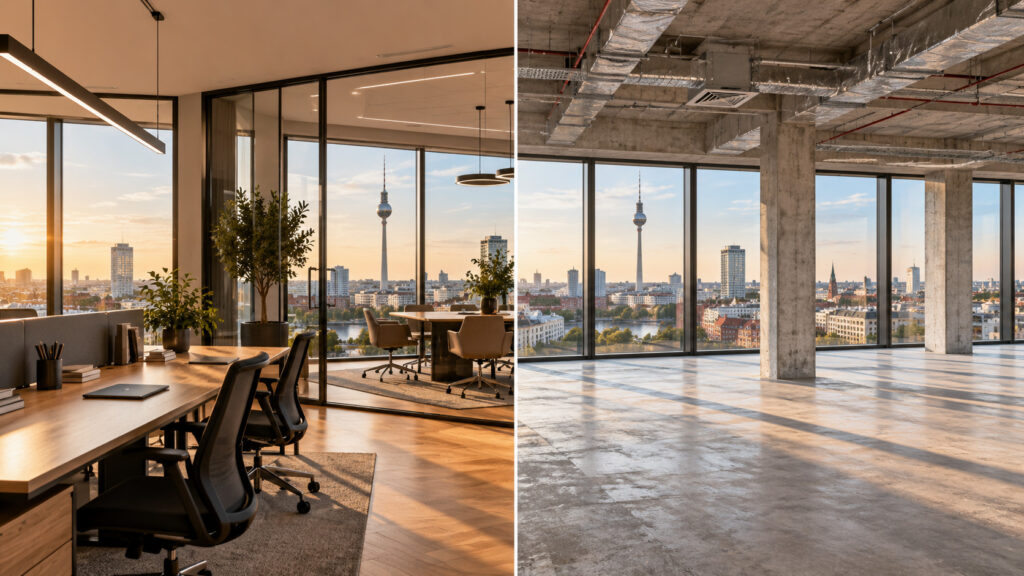
Choosing the right office space is one of the most important decisions a business can make. Your office affects more than just where your employees work. It influences your operating costs, flexibility, productivity, and ability to grow.
Two popular options are serviced offices and traditional offices. While both provide a professional working environment, they differ significantly in cost, convenience, lease terms, and management responsibilities.
So, which option makes more sense for your business? Let’s explore the key differences.
What Is a Serviced Office?
A serviced office is a fully furnished, ready-to-use workspace managed by a professional office provider. Businesses can move in and start working without investing in furniture, setting up internet connections, or organizing daily office operations.
Serviced offices typically offer:
- Fully furnished private offices
- High-speed internet and essential utilities
- Reception and administrative support
- Cleaning and maintenance services
- Access to meeting rooms and shared facilities
- Flexible rental agreements
Instead of dealing with multiple suppliers and contracts, businesses benefit from a convenient workspace solution with many essential services included in one agreement.
What Is a Traditional Office?
A traditional office is a commercial property rented directly from a landlord, usually through a longer-term lease.
Unlike serviced offices, traditional spaces may be delivered empty or partially furnished. The tenant is generally responsible for furnishing the workspace, arranging utilities, installing technology, and managing maintenance.
Traditional offices provide greater freedom to customize the working environment. However, they also require more planning, financial investment, and administrative responsibility.
Serviced Office vs Traditional Office: Key Differences
| Feature | Serviced Office | Traditional Office |
|---|---|---|
| Initial investment | Usually lower | Usually higher |
| Furniture | Typically included | Often purchased separately |
| Internet and utilities | Often included | Usually arranged separately |
| Lease flexibility | Generally more flexible | Often longer commitments |
| Setup time | Often ready for immediate use | May require preparation |
| Maintenance | Managed by provider | Usually tenant responsibility |
| Customization | Some limitations | Greater freedom |
| Scalability | Often easier | Depends on lease and space |
| Pricing | Bundled services | Base rent plus operating expenses |
Actual inclusions and contract terms vary by provider and property.
1. Cost: Which Office Is More Affordable?
When comparing office rental costs, looking only at the monthly rent can be misleading.
A traditional office may appear cheaper initially, but additional expenses can significantly increase the total cost.
These may include furniture, equipment, internet installation, utilities, cleaning, maintenance, insurance, and office management.
A serviced office combines many of these expenses into a single monthly payment, making costs easier to predict.
For startups and small businesses, serviced offices can reduce the initial financial commitment.
For larger companies with stable staffing requirements, traditional offices may become more cost-effective over a longer period, depending on the lease and operational expenses.
The best approach is to compare the total cost of occupancy rather than rent alone.
2. Flexibility: Adapting to Business Growth
Business needs change. A company with five employees today might have fifteen next year.
Traditional leases may limit how quickly a business can expand, downsize, or relocate.
Serviced offices are designed around flexibility. Depending on availability and contract conditions, companies may be able to move into larger or smaller offices without committing to a completely new long-term property arrangement.
This flexibility is particularly attractive to startups, project-based teams, and businesses entering new markets.
3. Convenience: Move In and Start Working
Setting up a traditional office takes time.
Finding furniture, installing internet, arranging cleaning services, and preparing meeting spaces can delay business operations.
With a serviced office, much of this infrastructure is already in place.
Your team can focus on clients, projects, and growth instead of organizing the workplace.
For businesses that need office space quickly, this convenience can be a major advantage.
4. Professional Image and Business Facilities
A professional office environment can influence how clients, employees, and business partners perceive your company.
Serviced offices often provide access to modern reception areas, professional meeting rooms, and well-maintained shared spaces.
These facilities help businesses maintain a professional presence without having to manage an entire commercial property.
Traditional offices can offer the same level of professionalism, but designing and maintaining the environment typically requires additional resources.
5. Customization and Brand Identity
Traditional offices offer an important advantage: greater control over the workspace.
Businesses can often design layouts, select furniture, create branded environments, and adapt the space to specific operational requirements, subject to lease conditions.
Serviced offices usually have existing layouts and design standards, meaning extensive customization may be limited.
For organizations requiring specialized facilities or highly customized interiors, traditional offices may be more suitable.
Which Office Type Is Right for Your Business?
Choose a serviced office if you:
- Want to minimize setup costs
- Need a professional workspace quickly
- Prefer predictable monthly expenses
- Value flexible rental arrangements
- Want to avoid managing daily office operations
- Expect your team size to change
Consider a traditional office if you:
- Need extensive workspace customization
- Have stable, long-term space requirements
- Prefer direct control over office management
- Have the resources to manage setup and maintenance
- Can commit to a longer lease
The Future of Office Space Is Flexible
Modern businesses increasingly value adaptability. Hybrid working arrangements, changing team sizes, and evolving business priorities have made flexibility an important consideration in office planning.
Rather than investing significant time and capital into managing office infrastructure, many companies prefer workspaces that allow them to concentrate on their core business.
Serviced offices offer an attractive balance of convenience, professional facilities, and operational flexibility.
However, the right choice ultimately depends on your company’s size, budget, growth plans, and workplace requirements.
Find Your Ideal Workspace with Plaza Cubes
At Plaza Cubes, we believe your workspace should support your business, not complicate it.
Whether you’re a startup, an established company, or a growing team, choosing the right office environment can make a meaningful difference to your daily operations.
Explore our flexible workspace solutions and discover an office environment designed around the way you work.
Discover Plaza Cubes Offices — Find Your Ideal Workspace.